Our Working Time: 09:00 am To 06:00 pm


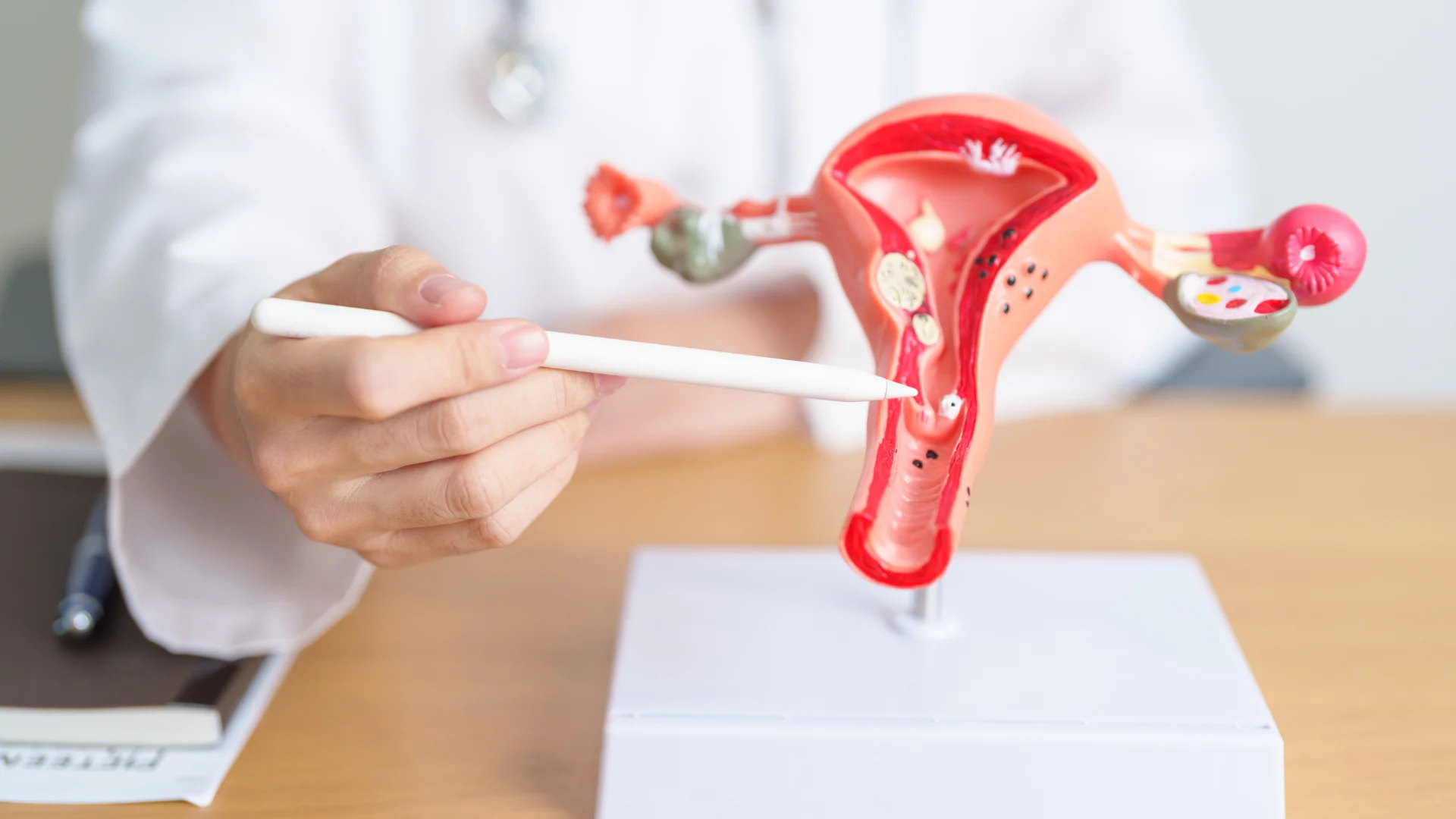
Endometriosis
Expert Private Diagnosis & Treatment for Endometriosis
Endometriosis is one of the most common yet most misdiagnosed gynaecological conditions — affecting 1 in 10 women in the UK, yet taking an average of eight years to diagnose. If you have been living with painful periods, chronic pelvic pain, or unexplained fertility difficulties, you deserve fast answers and expert care. At Gynaeaesthetics London, Mr Mohammad Masood offers specialist private endometriosis diagnosis and treatment with same-week appointments across Essex and East London and no GP referral needed.
What Is Endometriosis?
Endometriosis is a chronic gynaecological condition in which tissue similar to the lining of the womb — known as the endometrium — grows outside the uterus. This tissue can develop on the ovaries, fallopian tubes, the lining of the pelvis, the bowel, the bladder, and in rare cases other areas of the body.
Like the normal womb lining, this misplaced tissue responds to the hormonal changes of the menstrual cycle — thickening, breaking down, and bleeding with each cycle. Unlike the womb lining, however, this blood has no way to leave the body — leading to inflammation, the formation of scar tissue, and in some cases the development of cysts on the ovaries known as endometriomas.
Endometriosis is a complex, chronic condition that can have a profound impact on a woman’s quality of life, relationships, fertility, and mental health. Early diagnosis and specialist management are essential to preventing progression and protecting long-term health and fertility.
Stages of Endometriosis
Endometriosis is classified into four stages based on the extent and location of the disease:
Stage 1 — Minimal
Small, superficial implants of endometrial tissue on the pelvic organs or peritoneum. Little or no scar tissue present.
Stage 2 — Mild
More numerous implants, slightly deeper than in Stage 1. Some scar tissue may be present but the extent is limited.
Stage 3 — Moderate
Multiple deep implants, small endometriomas on the ovaries, and more significant scar tissue and adhesions present.
Stage 4 — Severe
Extensive deep implants, large endometriomas on one or both ovaries, and significant adhesions affecting the pelvic organs. This is the most advanced stage of the condition.
It is important to note that the stage of endometriosis does not always correlate with the severity of symptoms — some women with Stage 1 endometriosis experience debilitating pain, while others with Stage 4 may have minimal symptoms.
Symptoms of Endometriosis
Endometriosis symptoms vary widely between women and can mimic a number of other conditions — which is one of the reasons it is so frequently misdiagnosed or dismissed. Common symptoms include:
- Painful periods — often severe and debilitating, far beyond normal menstrual cramping
- Chronic pelvic pain that persists throughout the menstrual cycle
- Pain during or after sexual intercourse — particularly deep penetration
- Painful bowel movements or urination — especially during a period
- Heavy or irregular periods
- Bloating — sometimes referred to as “endo belly”
- Fatigue and low energy — particularly around the time of a period
- Difficulty conceiving or unexplained fertility problems
- Shoulder tip pain — in rare cases where endometriosis affects the diaphragm
- Low mood, anxiety, or depression as a result of chronic pain and its impact on daily life
Many women are told their painful periods are normal, or that their symptoms are exaggerated — leading to years of unnecessary suffering. At Gynaeaesthetics London, we take every symptom seriously and are committed to getting to the bottom of your pain as quickly as possible.
How Does Endometriosis Affect Fertility?
Endometriosis is one of the leading causes of female infertility, affecting approximately 30 to 50 percent of women with the condition. It can impact fertility in several ways:
- Endometriomas on the ovaries can damage egg quality and ovarian reserve
- Adhesions and scar tissue can distort the pelvic anatomy, blocking the fallopian tubes or preventing the egg from travelling normally
- Inflammation in the pelvic environment can affect the quality of eggs, sperm, and embryos
- Hormonal imbalances associated with endometriosis can interfere with ovulation
Early diagnosis and appropriate management of endometriosis can significantly improve fertility outcomes. If you are struggling to conceive and suspect endometriosis may be a factor, we strongly encourage you to seek specialist assessment as soon as possible.
How Is Endometriosis Diagnosed?
Endometriosis can be one of the most challenging conditions to diagnose — it cannot be identified through a blood test or standard ultrasound alone, and symptoms often overlap with other gynaecological conditions. At Gynaeaesthetics London, Mr Masood uses a combination of approaches to reach a diagnosis as efficiently and accurately as possible.
Private Consultation
Your consultation will begin with a thorough and unhurried review of your symptoms, menstrual history, and medical background. Mr Masood will listen carefully to everything you describe and take your concerns seriously from the very first appointment.
Pelvic Ultrasound
A pelvic ultrasound can identify endometriomas on the ovaries and in some cases deep endometriosis deposits — though it cannot rule out endometriosis entirely.
MRI Scan
An MRI scan provides more detailed imaging of the pelvic organs and can help identify deep infiltrating endometriosis — particularly where bowel or bladder involvement is suspected.
Diagnostic Laparoscopy
The only definitive way to diagnose endometriosis is through a diagnostic laparoscopy — a minimally invasive keyhole procedure in which a small camera is inserted into the abdomen to directly visualise the pelvic organs. This allows Mr Masood to identify endometrial deposits, assess the extent of the disease, and in many cases treat the condition at the same time.
Treatment Options
There is currently no cure for endometriosis, but the condition is very manageable with the right specialist treatment. Treatment is always tailored to your individual symptoms, the stage of the disease, and your fertility goals.
Pain Management
In the short term, appropriate pain relief — including anti-inflammatory medications and hormonal treatments — can help manage symptoms while a longer-term treatment plan is put in place.
Hormonal Treatments
Hormonal therapies work by suppressing the menstrual cycle and reducing oestrogen levels — starving the endometrial deposits of the hormonal stimulation they need to grow and bleed. Options include:
- The combined oral contraceptive pill taken continuously
- Progesterone-only treatments including the Mirena coil, mini-pill, or implant
- GnRH analogues — injections or nasal sprays that temporarily induce a menopause-like state to suppress endometriosis activity
Laparoscopic Surgery
For women with significant endometriosis, moderate to severe symptoms, or fertility concerns, laparoscopic surgery is often the most effective treatment option. Mr Masood is an experienced laparoscopic surgeon and can perform:
- Excision surgery — the precise surgical removal of endometrial deposits, which offers the most effective and long-lasting symptom relief
- Ablation — the destruction of endometrial deposits using heat or laser energy
- Endometrioma removal — the careful surgical removal of ovarian cysts caused by endometriosis, with close attention to preserving ovarian tissue and egg reserve
- Adhesiolysis — the division of scar tissue and adhesions to restore normal pelvic anatomy
Fertility Treatment
For women with endometriosis who are trying to conceive, Mr Masood will provide a thorough fertility assessment and recommend the most appropriate next steps — whether that is surgical treatment, ovulation induction, or referral to a fertility specialist for IVF where indicated.
Long-Term Management
Endometriosis is a chronic condition that requires ongoing management. Mr Masood will work with you to develop a long-term plan that minimises symptoms, protects your fertility, and supports your overall health and wellbeing over time.
The Emotional Impact of Endometriosis
The impact of endometriosis extends far beyond physical symptoms. Chronic pain, fertility difficulties, repeated medical appointments, and years of being dismissed or misdiagnosed can take a significant toll on a woman’s mental health, relationships, career, and overall quality of life.
Many women with endometriosis experience anxiety, depression, and feelings of isolation — particularly when they feel their pain has not been taken seriously. At Gynaeaesthetics London, we understand this deeply and are committed to providing not just expert medical care but genuine compassion and support throughout your treatment journey.
Why Choose Gynaeaesthetics London?
- Specialist endometriosis care led by Mr Mohammad Masood
- Experienced laparoscopic surgeon — diagnosis and treatment in one procedure
- Comprehensive diagnostic approach including ultrasound, MRI, and laparoscopy
- Full range of medical and surgical treatment options
- Fertility-focused approach for women trying to conceive
- No GP referral needed
- Same-week appointments available
- Clinics in Hornchurch, Brentwood, and Ilford
- Sensitive, compassionate approach throughout
- Fully confidential from start to finish
- Consultations from £200
Frequently Asked Questions
On the NHS, endometriosis takes an average of eight years to diagnose. With private care at Gynaeaesthetics London, investigations can be arranged rapidly — and a definitive diagnosis through diagnostic laparoscopy can be achieved in a matter of weeks rather than years.
There is currently no cure for endometriosis, but with the right treatment the condition can be very effectively managed. Laparoscopic excision surgery offers the best long-term results in terms of symptom relief and reducing recurrence.
Endometriosis can affect fertility, but many women with the condition go on to conceive naturally or with assistance. Early diagnosis and appropriate treatment — particularly surgical management — can significantly improve fertility outcomes.
Endometriosis can recur following surgery, particularly if hormonal suppression is not used afterwards. Mr Masood will discuss the most appropriate long-term management plan to minimise the risk of recurrence following any surgical treatment.
Endometriosis is not cancer and does not increase the risk of most types of cancer. In very rare cases, a small increased risk of certain ovarian cancers has been identified in women with severe endometriosis — which is another reason why regular monitoring and specialist management are important.
Our Services
Book Your Consultation Today
Don't put it off any longer. Get fast, private, consultant-led care at a clinic near you — with no GP referral needed and appointments often available within the same week.