Our Working Time: 09:00 am To 06:00 pm


Abnormal Smear & Colposcopy
Fast Private Colposcopy & Expert Review After an Abnormal Smear Result
Receiving an abnormal smear result can be an anxious and unsettling experience — and being told to wait weeks or months for a follow-up appointment only makes it worse. At Gynaeaesthetics London, we offer fast private colposcopy with no referral needed, giving you expert assessment, clear answers, and peace of mind as quickly as possible. Clinics across Essex and East London with same-week appointments available.
What Is a Smear Test?
A cervical smear test — also known as a cervical screening test — is a routine procedure that checks the health of the cervix by collecting a small sample of cells from its surface. These cells are then examined under a microscope to identify any abnormal changes that could, if left untreated, develop into cervical cancer over time.
Smear tests do not diagnose cancer — they identify abnormal cell changes at an early stage, when they are most easily and effectively treated. Regular cervical screening is one of the most important things a woman can do to protect her long-term health.
What Does an Abnormal Smear Result Mean?
An abnormal smear result does not mean you have cancer. In the vast majority of cases, it simply means that some cells on the cervix have undergone changes — known as cervical intraepithelial neoplasia or CIN — that require further investigation.
Abnormal results are graded based on the severity of the cell changes:
Borderline or Low-Grade Changes
Minor cell changes that often resolve on their own. A colposcopy may be recommended to monitor the cervix more closely and determine whether any treatment is needed.
CIN 1 — Mild Dyskaryosis
Mild abnormal cell changes affecting the lower third of the cervical lining. Many cases of CIN 1 resolve naturally without treatment, though monitoring is recommended.
CIN 2 — Moderate Dyskaryosis
Moderate abnormal changes affecting the lower two thirds of the cervical lining. Treatment is usually recommended to prevent progression.
CIN 3 — Severe Dyskaryosis
More significant abnormal changes affecting the full thickness of the cervical lining. Treatment is strongly recommended to prevent potential progression to cervical cancer.
It is important to remember that even CIN 3 is not cancer — it is a pre-cancerous change that is highly treatable when identified and managed promptly.
What Is Colposcopy?
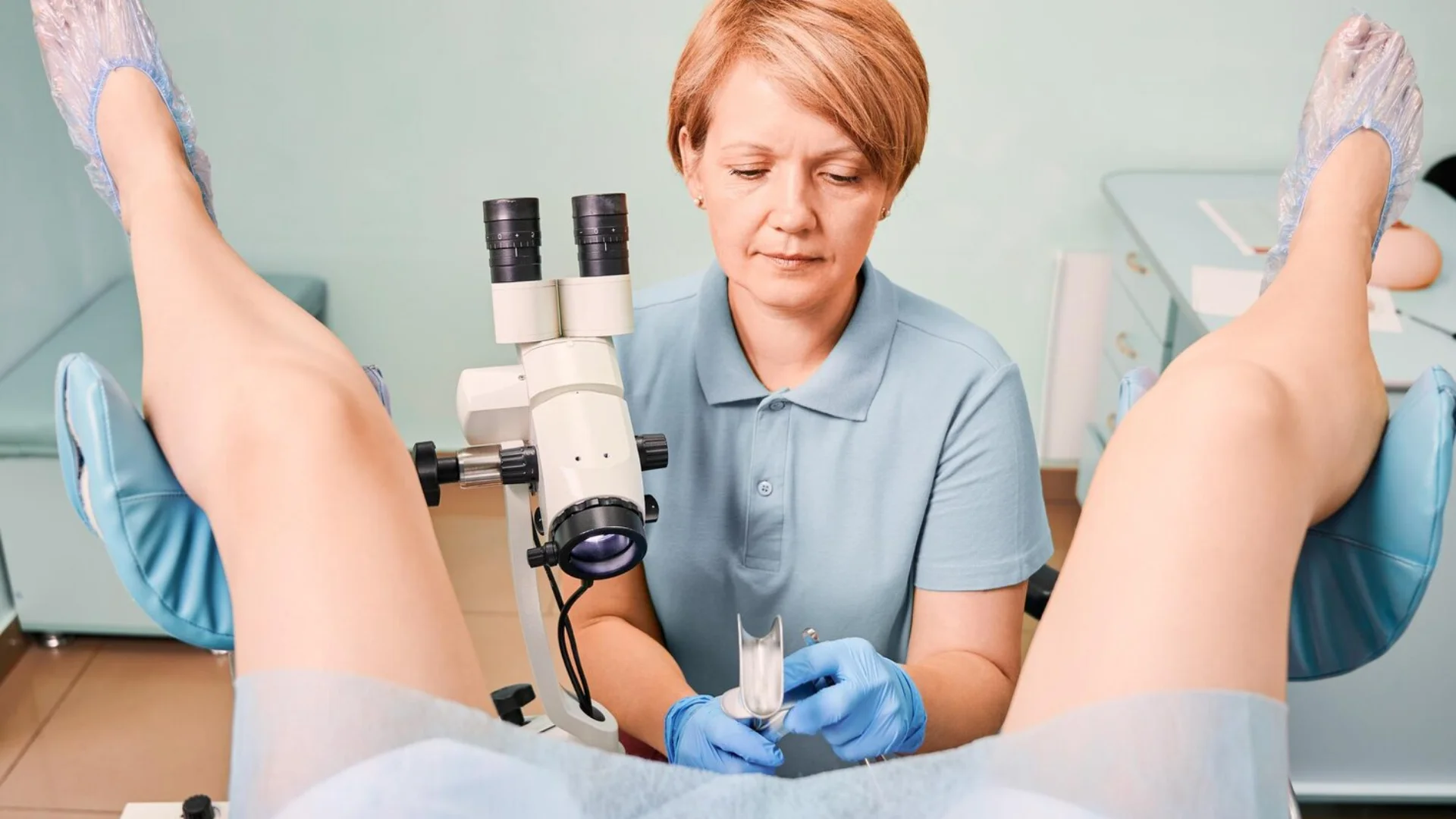
Colposcopy is a detailed examination of the cervix using a specialised magnifying instrument called a colposcope. It allows the specialist to examine the cervix in much greater detail than a standard smear test, identifying the exact nature and location of any abnormal cells.
During a colposcopy, a small amount of liquid — typically acetic acid or iodine — is applied to the cervix. This causes any abnormal areas to become more visible under the colposcope, allowing Mr Masood to assess the cells accurately.
If any areas of concern are identified, a small tissue sample — known as a biopsy — may be taken for laboratory analysis to confirm the nature of the cell changes.
What to Expect at Your Colposcopy Appointment
We understand that colposcopy can feel daunting — particularly when you are already anxious about your smear result. At Gynaeaesthetics London, we do everything we can to make the experience as comfortable and reassuring as possible.
Here is what to expect:
Before the Appointment
No special preparation is required. We recommend wearing comfortable clothing and arranging for someone to accompany you if you would like support.
During the Procedure
You will be asked to lie on an examination couch, similar to a smear test. A speculum is gently inserted to allow the colposcope to view the cervix. The procedure itself typically takes between 15 and 30 minutes and is performed by Mr Masood with care and sensitivity throughout.
During the Examination
A liquid solution is applied to the cervix to highlight any abnormal areas. Mr Masood will explain what he can see at each stage of the examination. If a biopsy is required, a small tissue sample will be taken — this may cause a brief cramping sensation.
After the Procedure
You may experience some light spotting or mild discomfort for a day or two following the examination. Most women are able to return to normal activities the same day. Biopsy results are typically available within a few weeks.
HPV & Cervical Screening
Human papillomavirus — commonly known as HPV — is a very common virus that is passed through skin-to-skin contact. Most people will have HPV at some point in their lives without ever knowing it. In the majority of cases the immune system clears the virus naturally — but in some cases certain strains of HPV can cause cell changes in the cervix over time.
Current cervical screening guidelines in the UK now test for HPV as a primary step. If high-risk HPV is detected, the sample is then checked for cell changes. A positive HPV result alongside abnormal cells is what typically triggers a referral for colposcopy.
It is important to understand that a positive HPV result does not mean you will develop cervical cancer — but it does mean that monitoring and follow-up is important.
Treatment Options Following Colposcopy
If abnormal cells are confirmed following colposcopy and biopsy, treatment may be recommended depending on the grade of the cell changes. Treatment options include:
Watchful Waiting
For mild cell changes such as CIN 1, a period of careful monitoring with repeat colposcopy may be recommended, as many low-grade changes resolve naturally without treatment.
LLETZ — Large Loop Excision of the Transformation Zone
The most common treatment for CIN 2 and CIN 3, LLETZ involves using a small wire loop heated by an electric current to remove the abnormal area of the cervix. It is performed under local anaesthetic, is highly effective, and has a very high cure rate.
Cone Biopsy
In some cases a slightly larger area of tissue may need to be removed using a cone-shaped excision — known as a cone biopsy. This is recommended where abnormal cells extend higher into the cervical canal.
Cryotherapy or Laser Treatment
In some cases, abnormal cells can be destroyed using freezing or laser techniques rather than excision.
Mr Masood will explain all available treatment options clearly and answer any questions you have before any procedure takes place.
Why Choose Gynaeaesthetics London?
- Consultant-led colposcopy by Mr Mohammad Masood
- Fast private appointments — no long NHS waits
- No GP referral needed
- Clear explanation of your results at every step
- Biopsy and treatment available at the same appointment where appropriate
- Sensitive and reassuring approach throughout
- Clinics in Hornchurch, Brentwood, and Ilford
- Fully confidential from start to finish
- Consultations from £200
Frequently Asked Questions
Colposcopy is not usually painful, though some women experience mild discomfort similar to a smear test. If a biopsy is taken you may feel a brief cramping sensation. Mr Masood will talk you through every step of the procedure to keep you as comfortable and informed as possible.
Biopsy results are typically returned within two to four weeks. Mr Masood will discuss the results with you in full and explain clearly what they mean and what — if any — further treatment is recommended.
Most women are able to return to normal activities on the same day. If a biopsy or treatment is carried out at the same appointment you may wish to take the remainder of the day to rest, but this is entirely your choice.
A standard colposcopy examination will not affect your fertility. Treatment procedures such as LLETZ carry a very small risk of affecting the cervix in future pregnancies, which Mr Masood will discuss with you in full if treatment is recommended.
We recommend avoiding your colposcopy appointment during your period where possible, as menstrual blood can make it more difficult to visualise the cervix clearly. Our team will help you schedule your appointment at the most suitable time.
Our Services
Book Your Consultation Today
Don't put it off any longer. Get fast, private, consultant-led care at a clinic near you — with no GP referral needed and appointments often available within the same week.